Apply for SEN Teaching Assistant Job
Students with special needs are often seen as different and are sometimes separated from the rest. Many of us know someone who faces these challenges, but those who are close to them understand something important: they are just like us. In fact, some possess talents that far exceed our own. They simply need a different approach, a different way to learn and communicate.
Building rapport with students who have Social, Emotional, and Mental Health (SEMH) needs begins with prioritising relationships over rules. These students thrive when they feel genuinely seen, valued, and safe, so small, consistent interactions like greeting them by name, showing interest in their strengths, and using warm, calm communication, lay the groundwork for trust.
Apply For Learning Support Assistant Job
They may communicate in different ways, yet their expressions can be incredibly innovative through music, through writing, through paintings, and in countless other forms.
Predictability is equally important: clear routines, advance warnings before transitions, and visual support help reduce anxiety and create a sense of security. When students know what to expect, they are far more likely to settle, engage, and take risks in their learning.
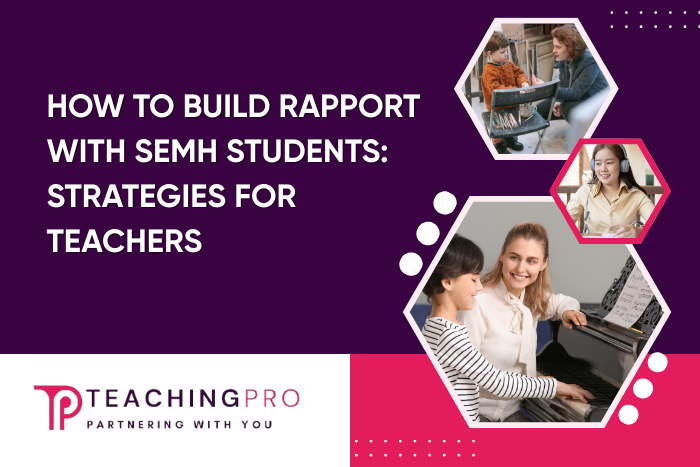
SEMH learners often struggle with intense emotions, so the teacher’s ability to stay calm, speak gently, and model coping strategies helps students co-regulate and return to a place where they can think clearly. Most importantly, teachers must develop a personalized way of communicating with each child – it is one of the most essential aspects of their profession. If a child loves playing the piano, then the surest way to reach their heart is through music.
Phrases like “I can see this is frustrating” or “It makes sense you feel upset” can defuse tension, especially when followed by gentle guidance towards the next step.
Empowerment also plays a huge role in building rapport. Offering simple choices such as which task to begin with or where to sit helps students regain a sense of control and reduces power struggles. Celebrating small wins and focusing on strengths bolsters self-esteem, especially for students who may have experienced repeated failure.
Apply For School Caretaker Job
Praise doesn’t need to be public; quiet, genuine acknowledgement can be far more effective for learners who are easily overwhelmed.
Finally, boundaries and follow-through solidify trust. Fair, calm, and restorative approaches to behaviour help students understand that mistakes can be repaired rather than punished. What matters most is reconnecting after conflict: a brief check-in or a warm “Good to see you today” communicates that relationships remain intact.
Flexibility and individualised approaches whether through sensory breaks, visual prompts, or adjusted expectations ensure that students feel supported, not singled out. When teachers combine empathy, consistency, and reflective practice, rapport becomes the foundation upon which SEMH students can truly thrive.